Identify issues earlier
Collisions become immediately perceptible during virtual assessment.

Haptic feedback for industrial VR
STRIVE stops movement at virtual surfaces. Reachability, range of motion and assembly processes can be assessed more realistically—long before a physical prototype is ready.
Why STRIVE?
Visual VR presents geometry. STRIVE adds the physical information that is missing when assessing range of motion and accessibility.
Collisions become immediately perceptible during virtual assessment.
Reachability and assembly can be evaluated before real components are available.
STRIVE enables physical questions to be assessed earlier in VR with tangible feedback, reducing the need for hardware prototypes.
The system
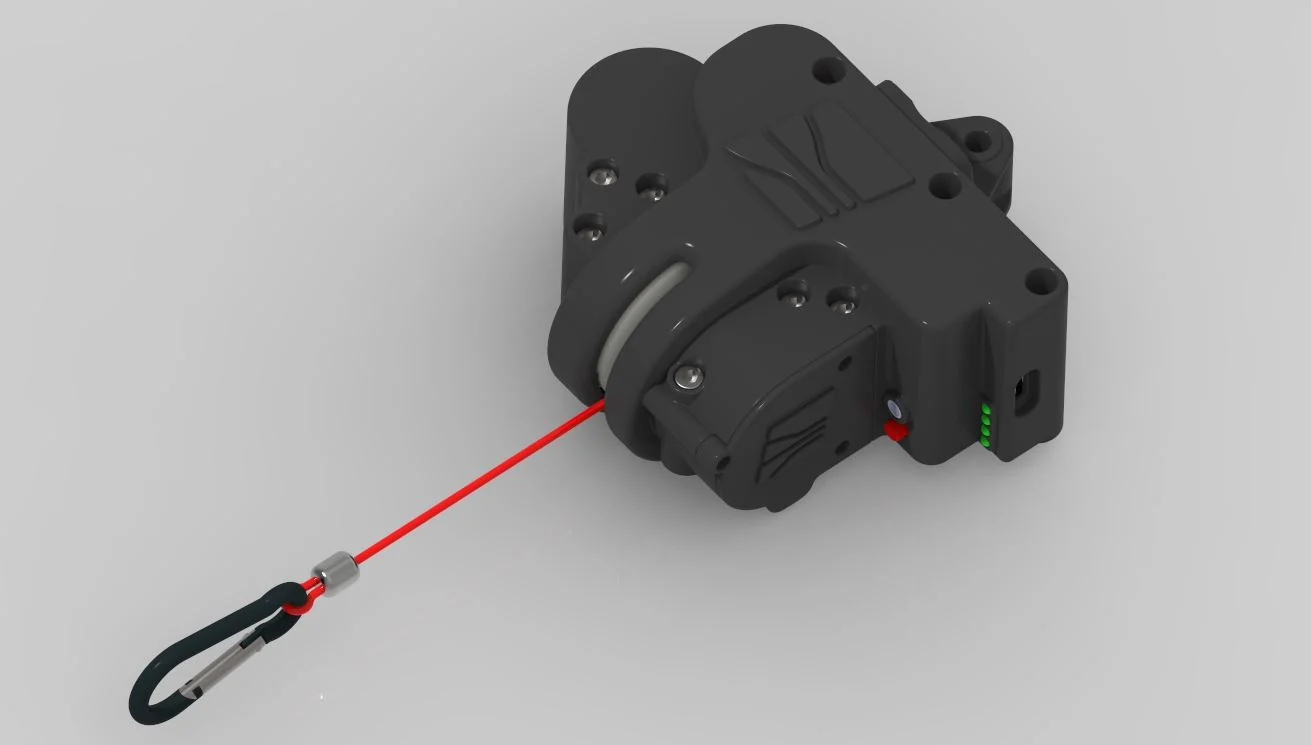
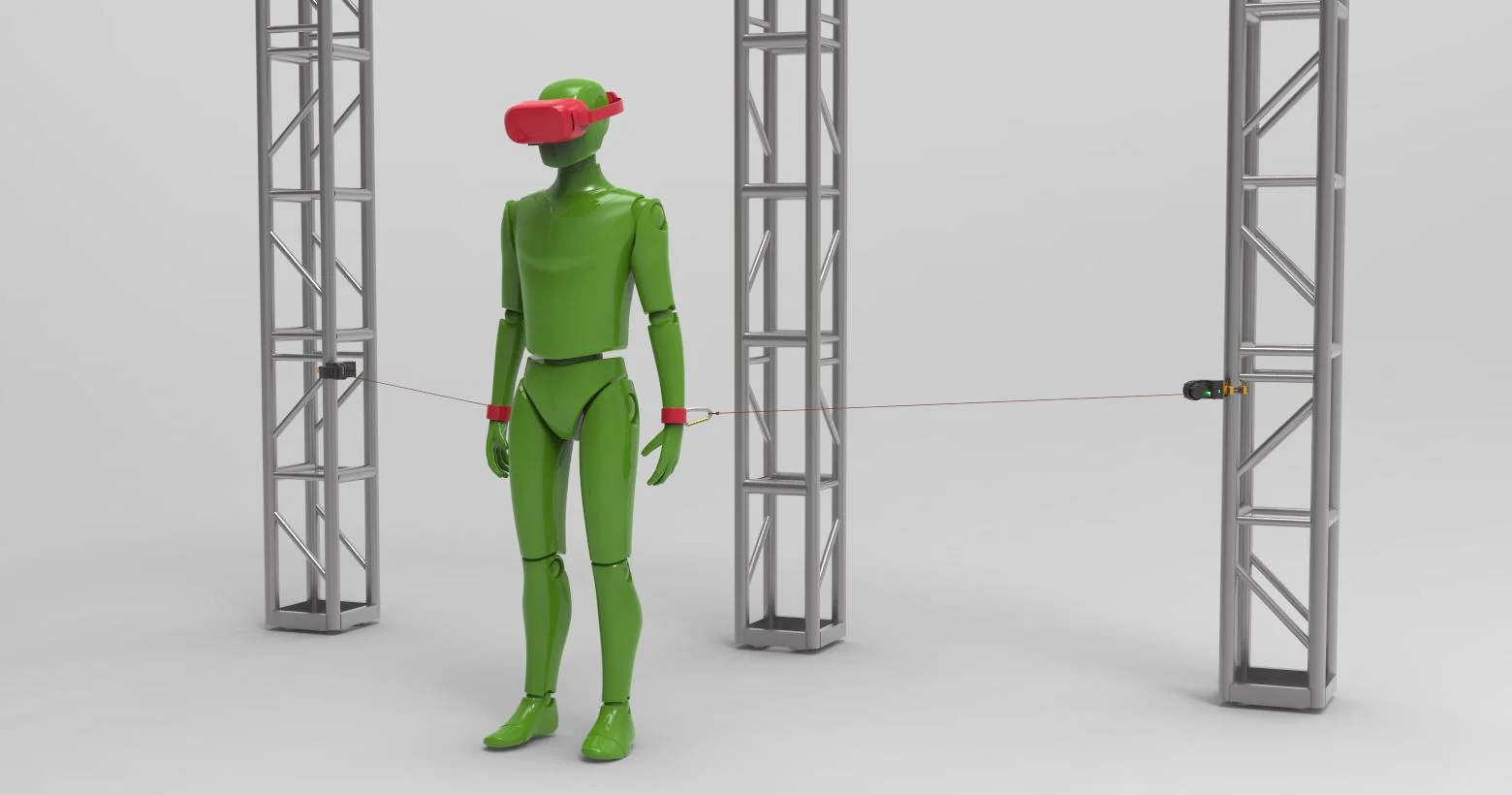
When the VR application detects a collision, the STRIVE Tool activates the appropriate device. This creates a physical counterforce precisely at the point of contact.
From practice
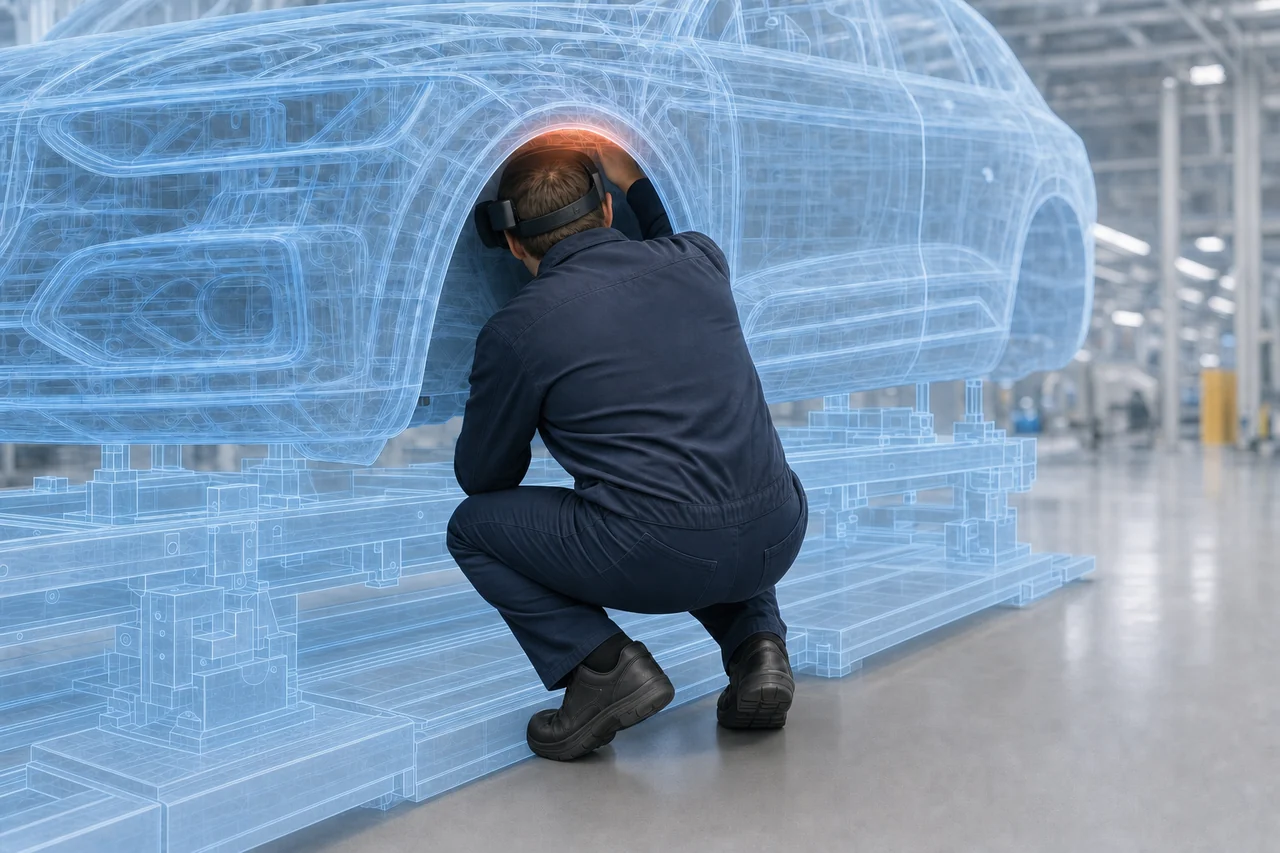
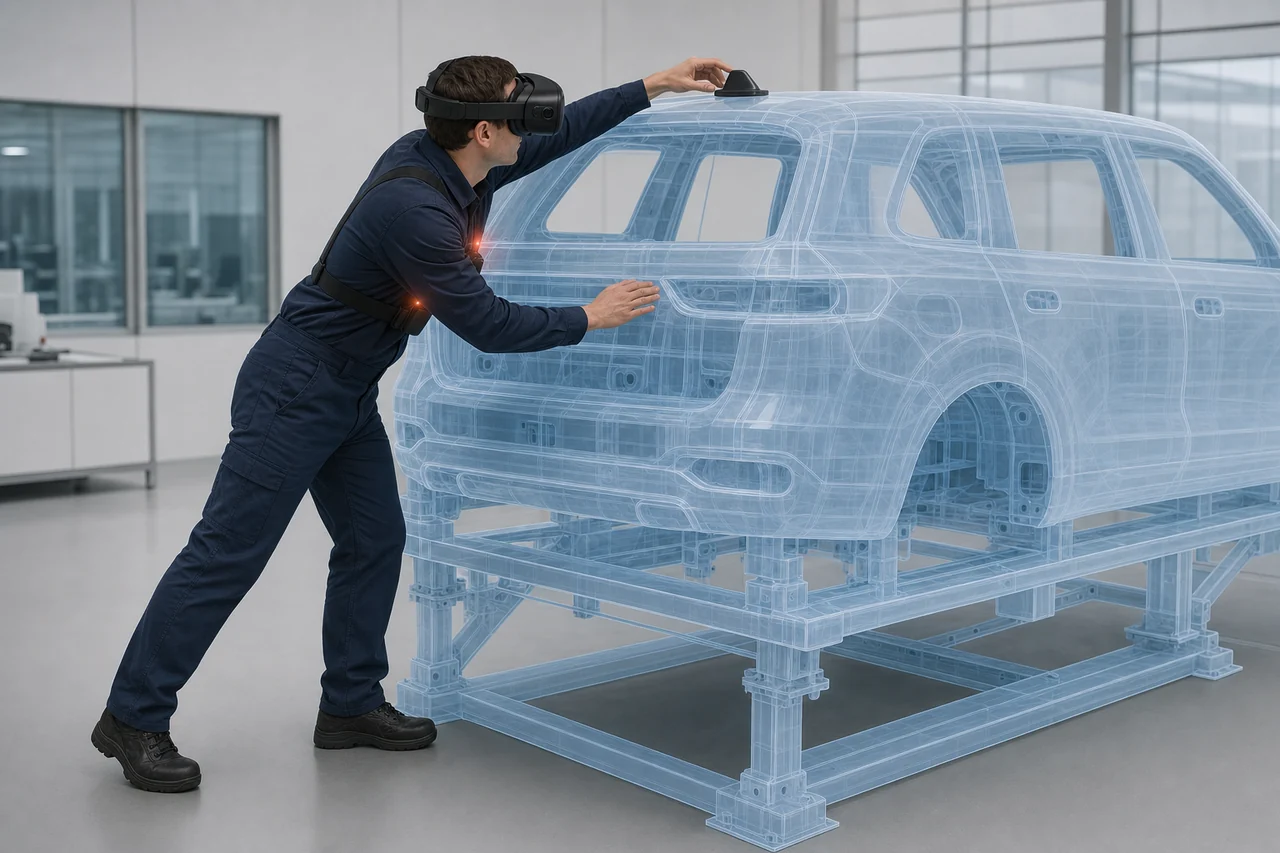
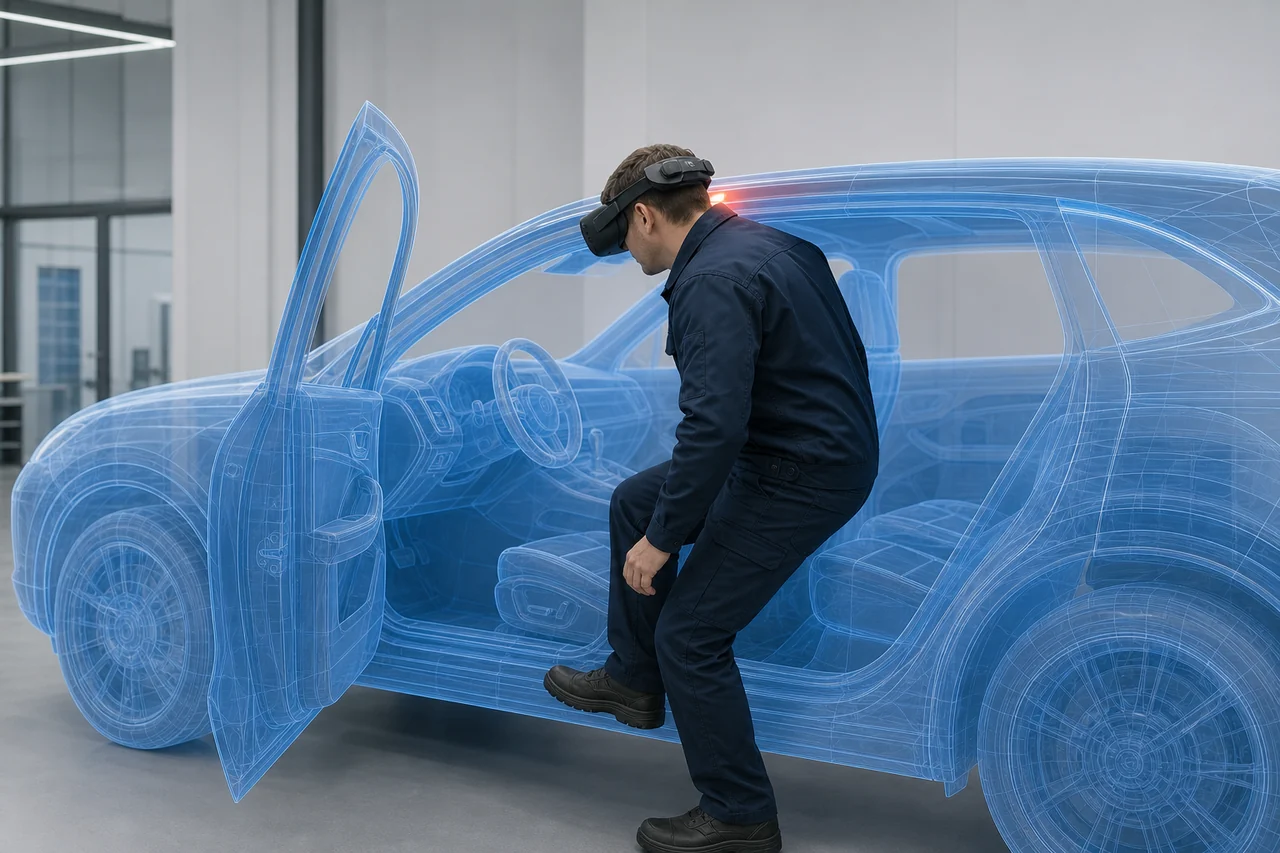
At an automotive manufacturer, STRIVE was used to assess visibility and workspace in the wheelhouse, the reachability of a roof antenna and head clearance during vehicle entry more realistically.
Explore the implemented applications* Illustrative representations: The described applications were implemented at an automotive manufacturer; original images cannot be published for confidentiality reasons.
Your next step