Reachability testing
Verify whether components, controls and assembly positions are genuinely accessible to users of different body sizes.

STRIVE for industry and research
From industrial product validation to research, STRIVE adds tangible feedback to VR and turns digital models into more realistic environments for decision-making and training.
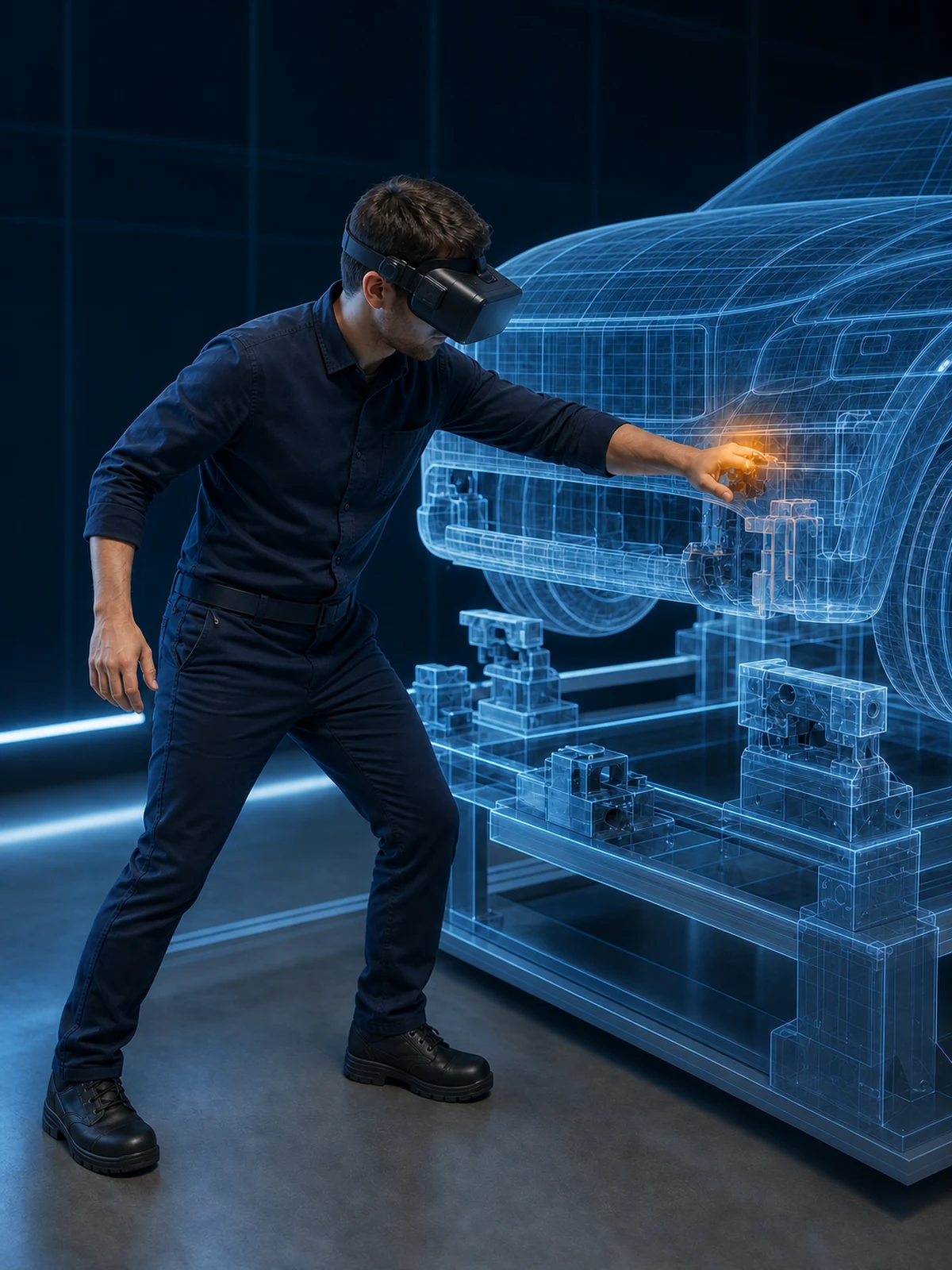
Industrial product development
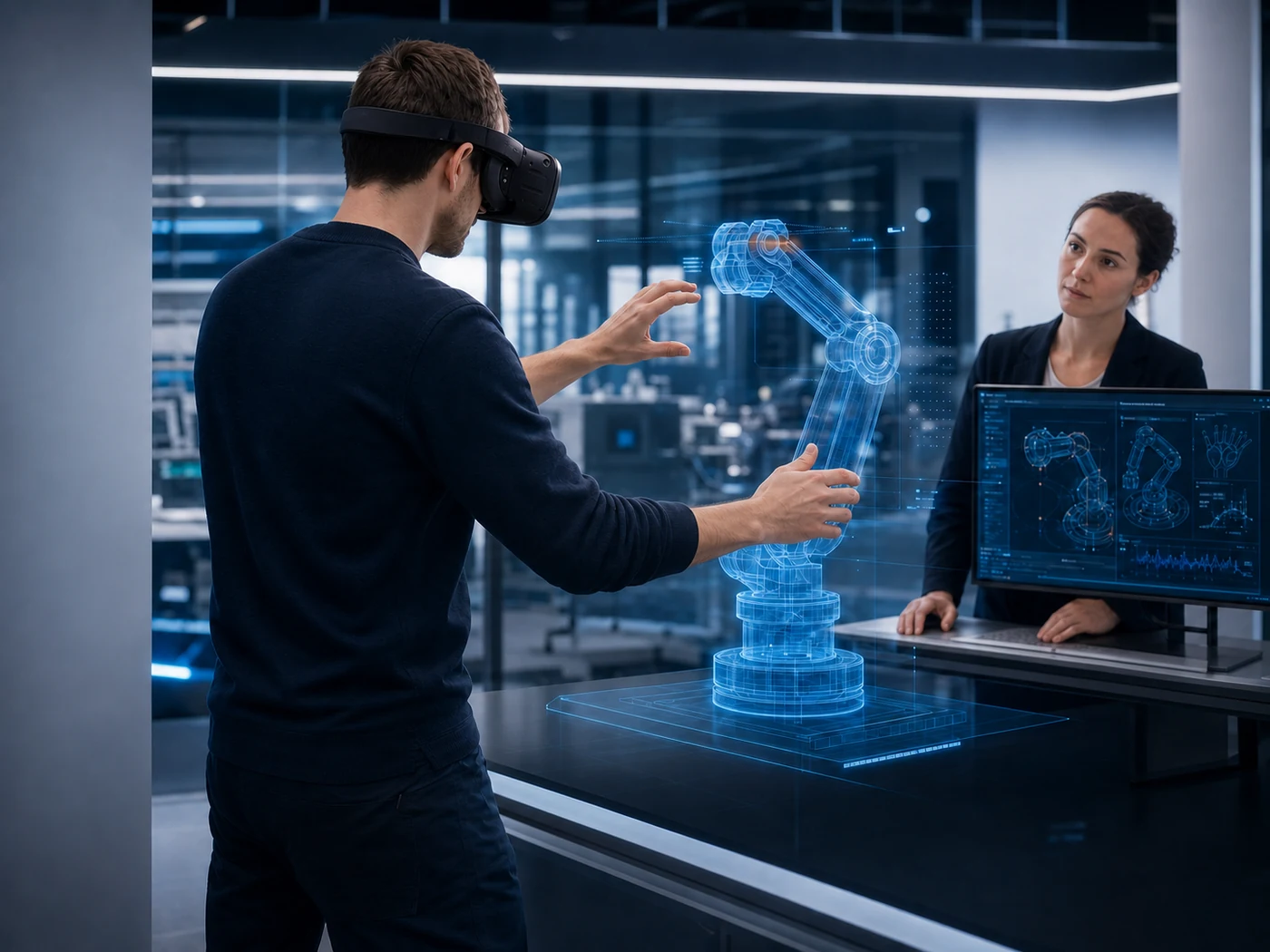
Digital twins and the Industrial Metaverse allow products, workplaces and processes to be experienced virtually at an early stage. STRIVE adds physical feedback to the visual simulation: users feel boundaries, contact and collisions directly on their bodies. This turns virtual assessment into a more realistic basis for development and validation.
Specific applications
Where vision alone is not enough, STRIVE makes virtual boundaries and contact physically perceptible – for more realistic validation and more effective training.
Verify whether components, controls and assembly positions are genuinely accessible to users of different body sizes.
Assess ranges of motion, body postures and contact at the head, chest, hips or legs more realistically.
Determine whether components can be installed, tools can be handled and planned work steps can be performed in practice.
Practise and refine procedures repeatedly with tangible contact points – even before a real facility or product is available.
Scientifically evaluated
In a published expert study, 16 VR specialists from the automotive industry tested STRIVE across five practice-oriented use cases.
View the study at ACM“It gives me the opportunity to see how tight it is in my physical and ergonomic space.”
“With the force feedback … I don't have to worry about my eyes first, that takes the strain off me.”
“Without this haptic feeling, you simply have less feedback … you don't know whether that is actually possible now.”
Source: Achberger et al., STRIVE: String-Based Force Feedback for Automotive Engineering, UIST 2021. Statements and results refer to the STRIVE prototype evaluated in the paper.
Three implemented examples
STRIVE makes physical interactions tangible in the virtual development process. This helps identify and prevent issues earlier, shorten validation loops and systematically reduce hardware prototypes – exactly where economic value is created.
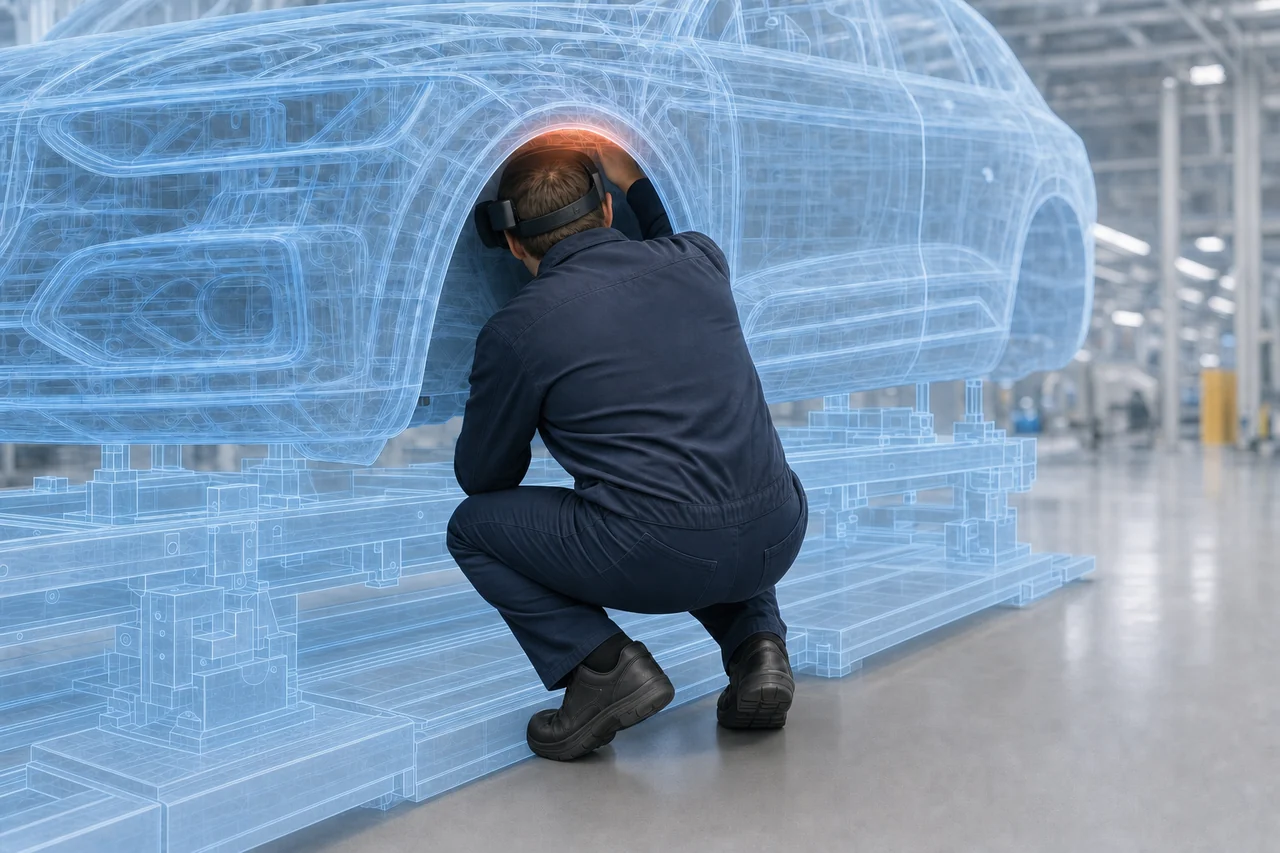
Early issue identification
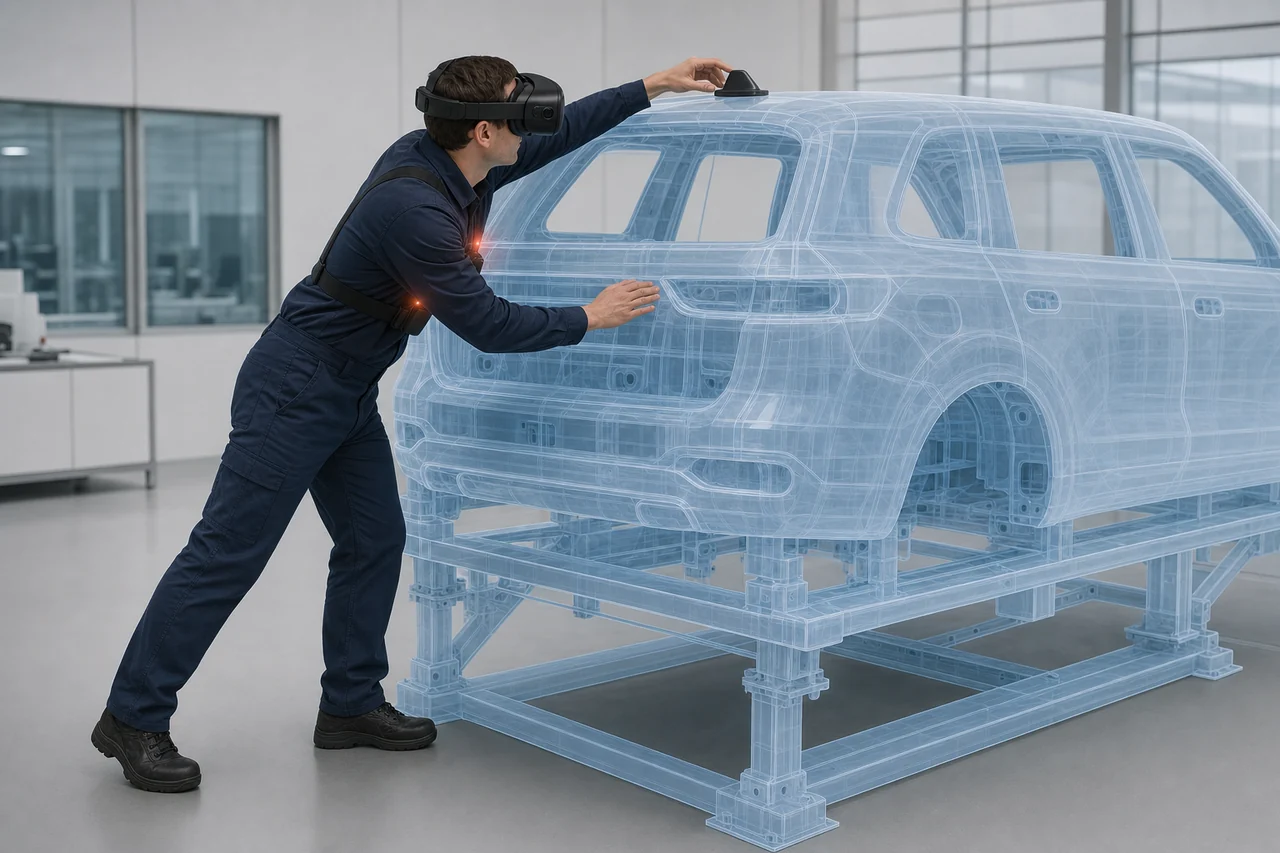
Shorter development time
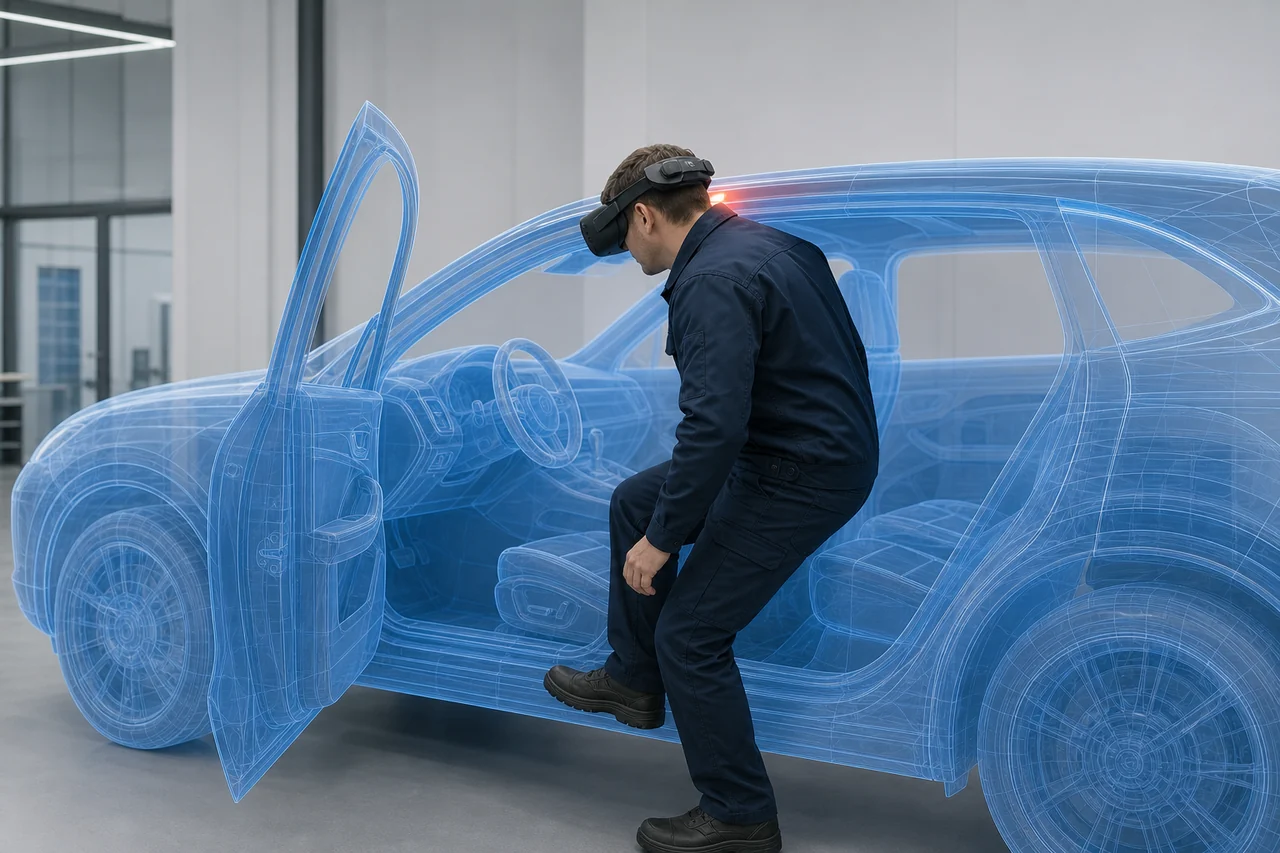
Reduced prototyping
* Note on the representations: The images shown were created for visualisation. The described use cases were implemented at an automotive manufacturer; original images cannot be published for confidentiality reasons.
From industry to research
STRIVE is not limited to individual industries or validation tasks. Wherever virtual environments are used for development, simulation, training or research, physical feedback makes interactions more understandable, realistic and meaningful.
Your VR application